TAIR MEI
Location: Sidi Hassine, Tunis, Tunisia
Surface: 50.000 m²
Program: Research Center, Environmental Education Hub, Water Management Facility, Sediment Treatment Plant, Ecological Restoration Site
Status: –
Year: 2021
Team: Anissa Le Scornet


Taïr Meï is located in the Sidi Hassine district of Greater Tunis. The project is named after the “bird of water,” referring to the migratory birds, especially flamingos, that populate the Sebkha Séjoumi salt lake, a significant emblem of Tunis. The site is situated between agricultural land and uncontrolled urban sprawl, bordering the lake and serving as a natural waste dump. Sidi Hassine, an informal and impoverished suburb, faces major urban development challenges due to rapid population growth, illegal construction, and the potential for a new peripheral ring road, which could further accelerate urbanization and the loss of agricultural land. These concerns make the area a crucial focus for sustainable urban planning. Drawing inspiration from Bruno Latour’s text “Where to Land?” the project embraces a bottom-up approach to urban development, as suggested by Latour. His analysis connects deregulation, rising inequalities, and the systemic denial of climate change, and proposes a reorientation through a political ecology grounded in territory. In applying this theory, the project aims to create a physical experience that forces acknowledgment of climate change. The site’s issues mirror Latour’s observations: Sidi Hassine’s deregulation is reflected in rapid population growth and spontaneous construction; inequalities are evident in the marginalized population living in poor conditions with minimal infrastructure; and climate change is felt through flooding, pollution, and a disjointed relationship between the city and the Sebkha. The fragmented agricultural landscape, squeezed by urban sprawl, further underscores the need for a new metropolitan ecology that integrates environmental, economic, and social sustainability.


Given the complexity of these global challenges, the project aims to develop an operative utopia that addresses the issues of mobility, density, and environmental restoration. Due to travel restrictions caused by the COVID-19 pandemic, the team researched the site remotely using articles, maps, and testimonies from local Tunisians, allowing them to reimagine the territory in a speculative manner. The project introduces a multiscalar urban strategy, aiming to reconnect Sidi Hassine with the rest of Greater Tunis. The proposal focuses on creating new mobility networks for pedestrians, cyclists, and trams, as well as structuring the area into three zones: an urbanized fringe guided by an aqueduct, a park along the Oued El Maleh, and an agricultural zone protecting existing farmlands. This strategy aims to transform the marginalized area into a new centrality for the city, blending metropolitan and local scales.


At the local level, the project emphasizes citizen participation and builds upon existing initiatives within Sidi Hassine, involving local stakeholders in the design process. The aqueduct, as a key element of the project, serves both as an irrigation system and a public promenade, shaping the urban fabric and enhancing the experience of traversing the area. The architectural project, the “Maison de la Sebkha,” serves as the focal point of this effort, located at the intersection of urbanization and park renewal. This research center focuses on the cultivation of salicornia, a plant species that can thrive in saline environments and may offer solutions to the challenges posed by climate change, such as soil salinization and water scarcity. The Maison de la Sebkha becomes a decision-making center for scientists, students, and visitors, providing a space for collaboration and awareness around the protection of the Sebkha ecosystem.


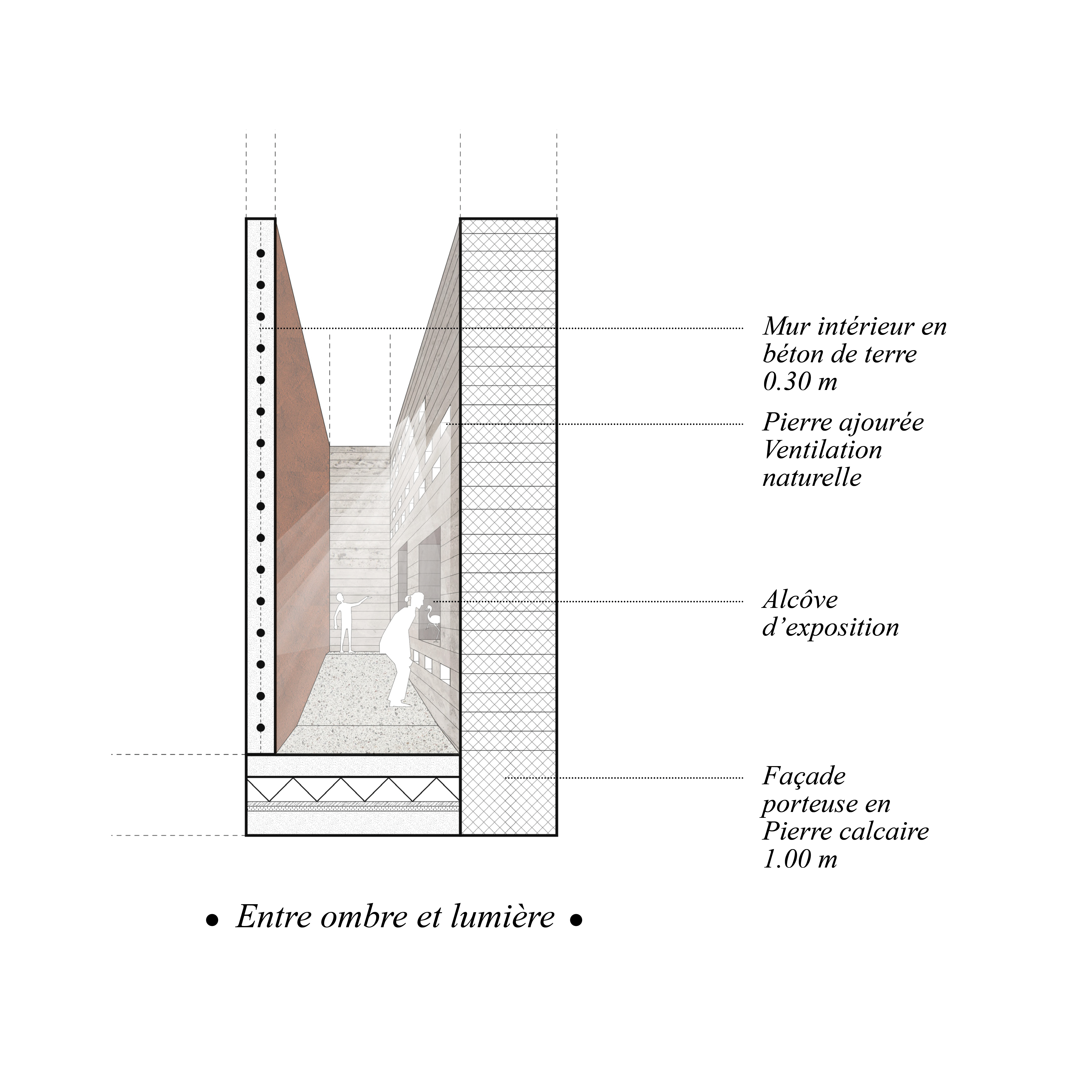

The architectural design features simple forms—such as cubes, towers, and bridges—that emerge from the landscape to define the space and embody the spirit of the place. The project also addresses water management with a rigorous irrigation system that includes the aqueduct, irrigation channels, and a well beneath the observatory. The water journey, defined by both the aqueduct and the Oued El Maleh, marks the park’s entrances and enhances the overall ecological experience. The halophilic park, a key feature of the project, focuses on developing sustainable agricultural practices suited to the site’s conditions. The park also fosters a connection between the community and the Sebkha, offering spaces for recreational activities and ecological education. The park’s design incorporates a mix of dense olive groves, forest areas, marshland, and open spaces for visitor exploration.


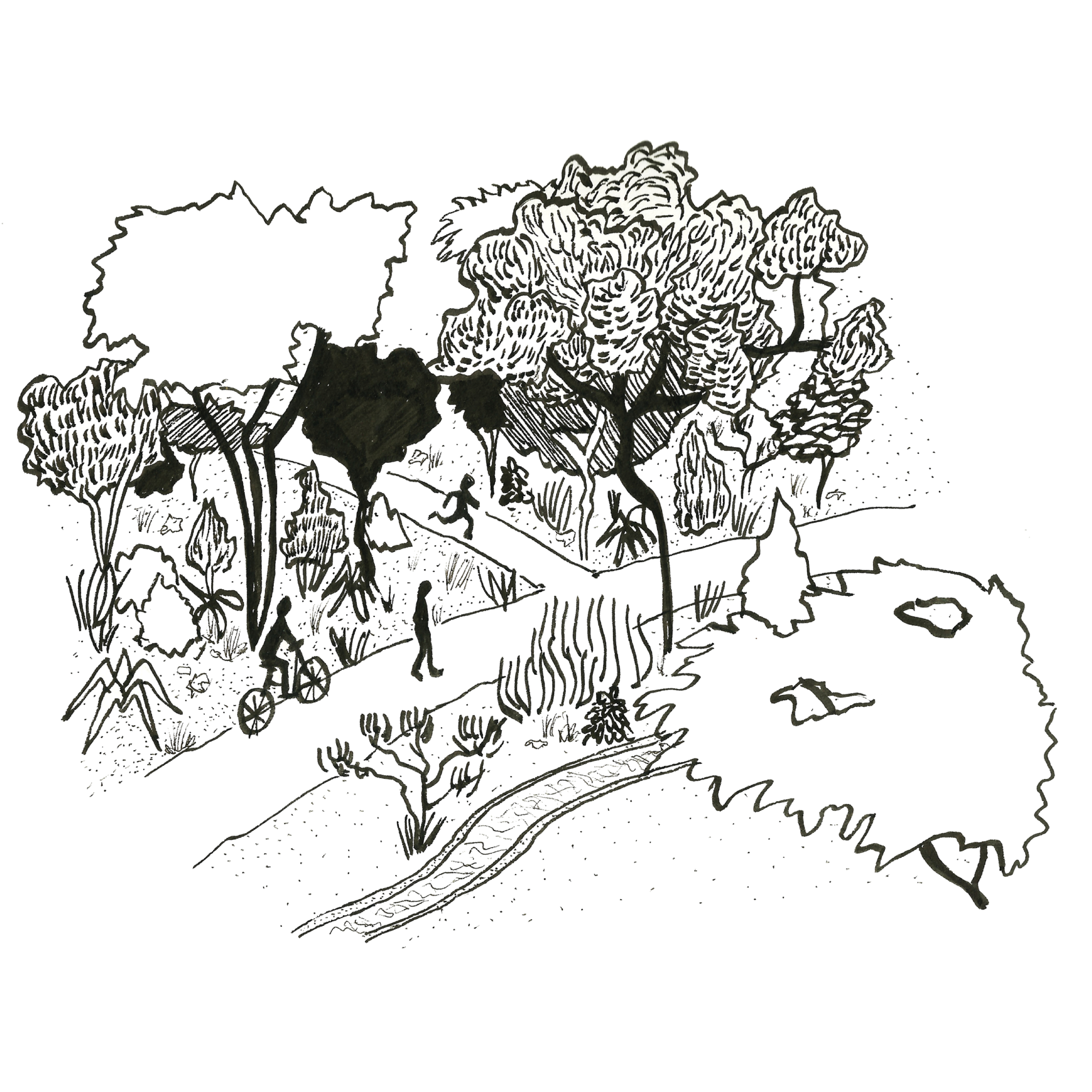
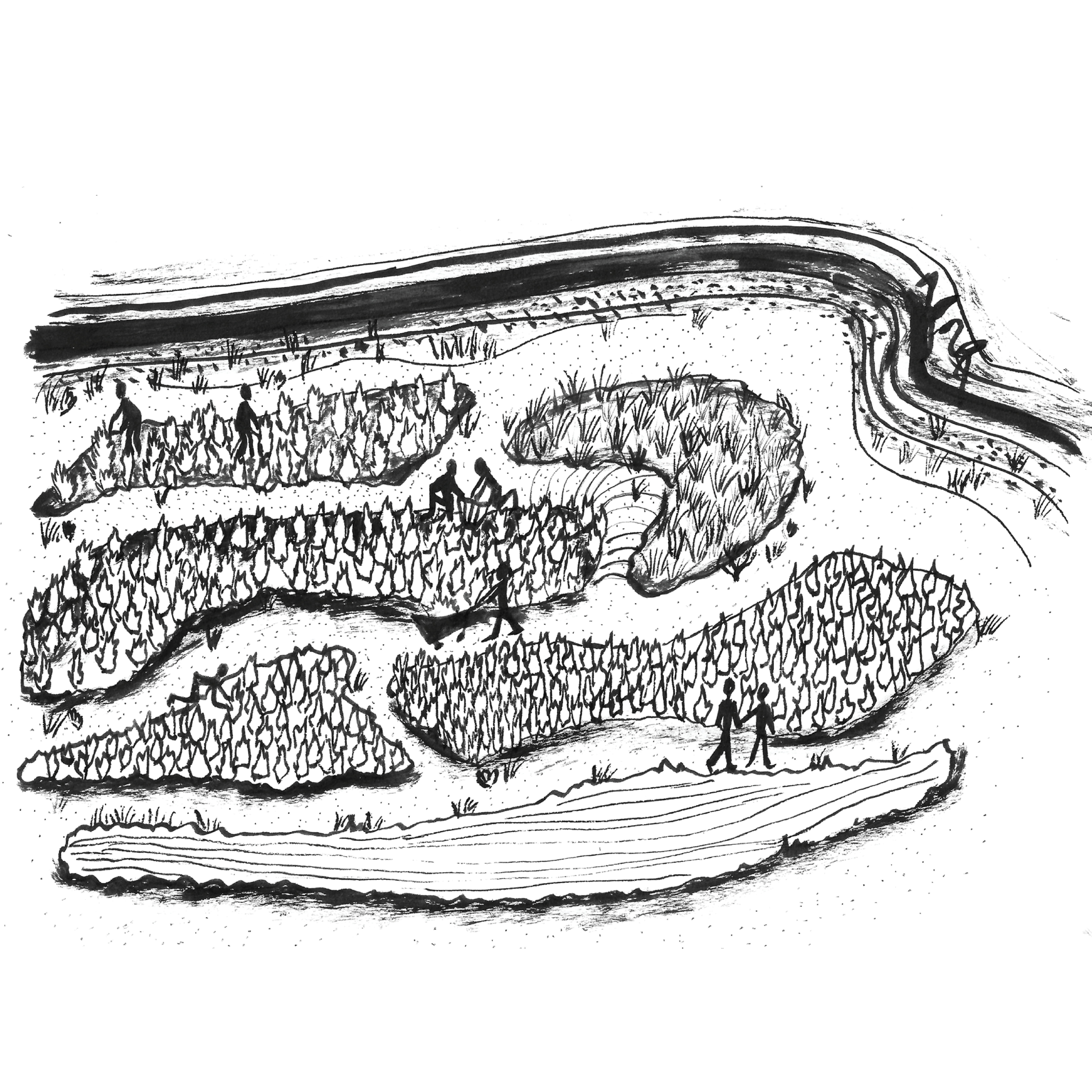


The built elements, including bike garages along the aqueduct, a central research cube, and the observatory tower, define the park’s structure. The cube, with its mysterious and monolithic exterior, opens up to the park through an amphitheater and serves as the center for research on salicornia cultivation. Inside, the space is divided into three biotope zones where researchers study the viability of salicornia in different environments. Between these zones, informal elements are integrated into the architectural design, emphasizing the intersection between formal urban planning and informal growth.
In summary, this project proposes a vision for Sidi Hassine that not only addresses the immediate environmental, social, and infrastructural issues of the area but also provides a model for sustainable urban development in the face of global challenges. By integrating research, ecological restoration, and community involvement, it aims to create a new urban identity for the district that aligns with the broader aspirations of Greater Tunis.


