PIZZO SELLA
Location: Palermo, Sicily, Italy
Surface: 10.000 m²
Program: Research Center, Environmental Education Hub, Water Management Facility, Sediment Treatment Plant, and Ecological Restoration Site
Status: –
Year: 2020
Team: Sofia Retana, Pauline Charpentier Noyer, Anissa Le Scornet


Our project seeks to reclaim a site deeply scarred by violence and transform it into a place of renewal and introspection. The Colline du Déshonneur, long controlled by the mafia and ultra-wealthy elites who turned it into an exclusive gated community, is a landscape of exclusion and unregulated destruction. By reintegrating this territory into the city and making it accessible to the public, we aim to elevate both body and mind through the act of climbing the hill—turning the journey itself into a symbolic path of reappropriation and reflection. The project is not only a response to territorial injustice but also a manifesto, visible from every key viewpoint in Palermo, declaring the city’s reclamation of its own land.

At its core, the project is structured around five fundamental functions. A Water Pavilion, built around a central reservoir, will act as both a symbolic and practical entry point, addressing one of the site’s critical challenges: water scarcity. Educational spaces will welcome both short-term visitors (100 people) and long-term residents, including students and professionals (70 people), providing classrooms, conference halls, housing, and communal dining areas to foster knowledge exchange. A sediment treatment hall will facilitate the recovery, filtration, and storage of natural materials, actively engaging the site in environmental restoration. Research spaces—including laboratories, plant incubation areas, and testing facilities—will support scientific inquiry into sustainable land management. Finally, through soil stabilization and the strategic planting of vegetation, the project will actively combat erosion, preventing further landslides and protecting the fragile ecosystem of the Capo Gallo Nature Reserve.


The intervention operates on multiple scales. From an urban perspective, its visibility from Palermo’s port, Foro Italico, and Mondello Beach establishes a strong relationship with the city, making it a constant reminder of reclaimed land. On a territorial level, its integration into the Capo Gallo Nature Reserve challenges the boundary between built and natural environments, rethinking the role of architecture in preserving and enhancing ecosystems. The project’s edges—the transition zones between city, project, and protected landscape—become critical moments of negotiation, where urban and ecological forces meet. Materiality plays a crucial role in the project’s presence. The architecture will be defined by terracotta brick and concrete, materials that echo the ruins of the incompiuti—abandoned structures that symbolize the mafia’s appropriation of the land. The alternation of façade compositions creates a dynamic interplay of light and shadow, emphasizing the roughness of the site while integrating with the mountainous terrain. The red hue of the brick, standing out in the landscape, is not just an aesthetic choice but a deliberate strategy to assert the project’s visibility and mark its presence from afar.
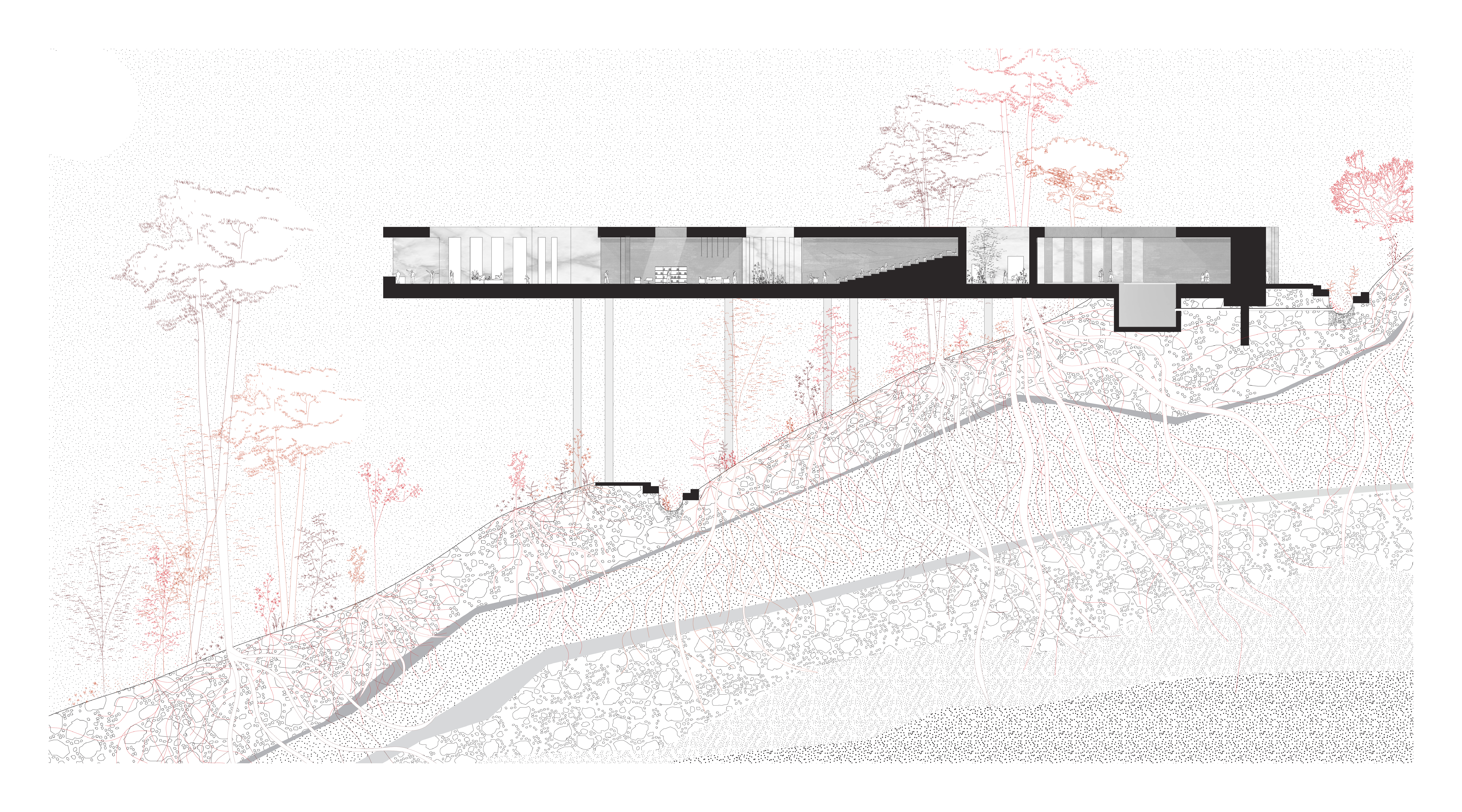

The master plan is designed to work with the site’s extreme topography. An old road, once a scar cutting through the land, will be transformed into a flowing watercourse, serving a dual function: collecting and channeling rainwater while redefining the spatial organization of the project. The architecture will intersect perpendicularly with this water system, responding to the natural slope of the terrain. A radical gesture will be made through the demolition of the incompiuti, erasing the traces of illegal occupation and symbolizing the site’s rebirth under a new order. This is not a project that seeks neutrality; it is an act of defiance and reclamation, turning a place of dishonor into one of knowledge, resilience, and ecological repair. This intervention directly addresses urgent territorial challenges. It confronts the privatization of land by criminal and economic elites, tackles the region’s critical water shortages, and actively fights against the erosion threatening the stability of the mountain. By doing so, it safeguards not only the natural landscape but also the agricultural and cultural heritage of Sicily, ensuring its preservation for future generations.
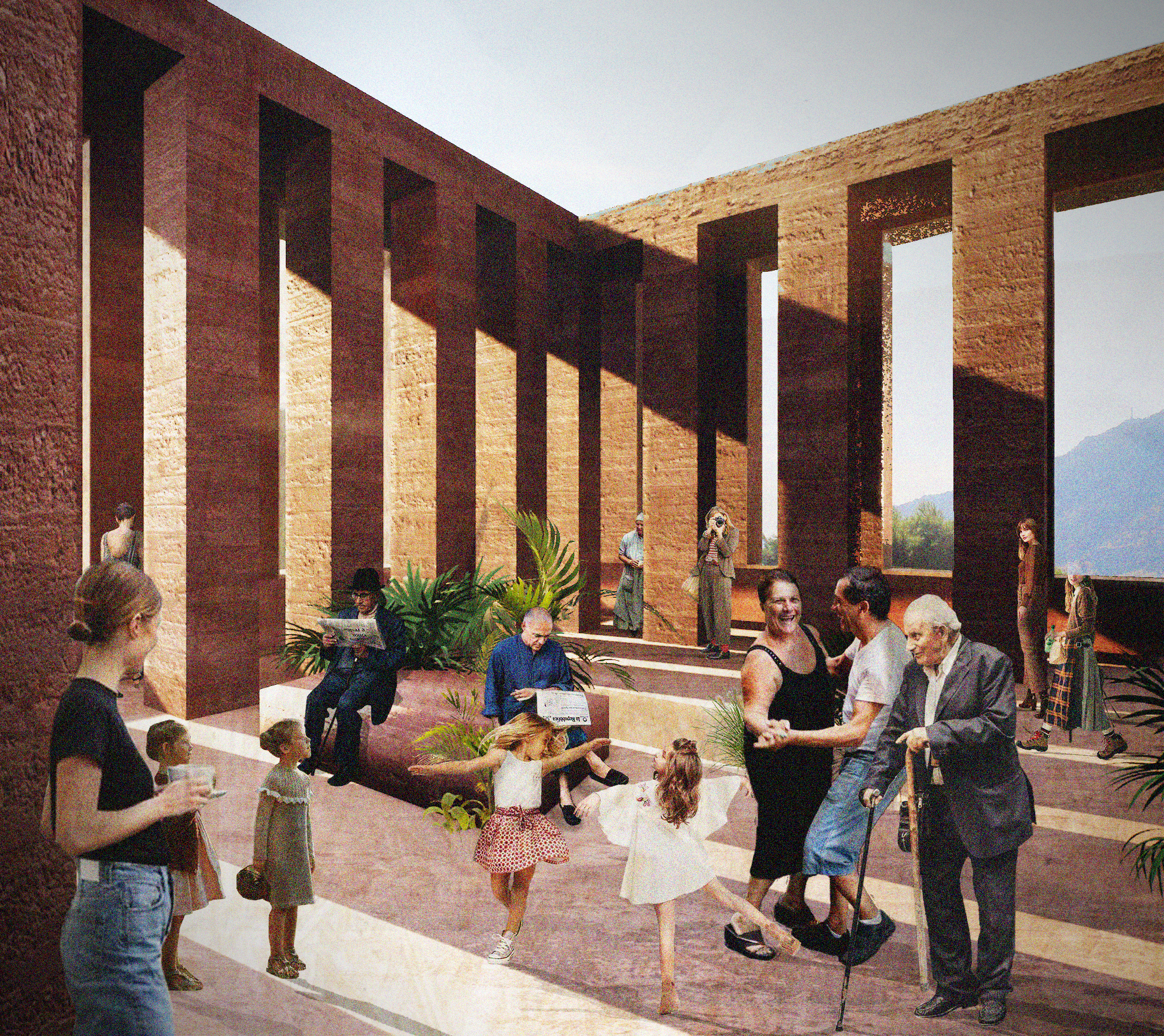

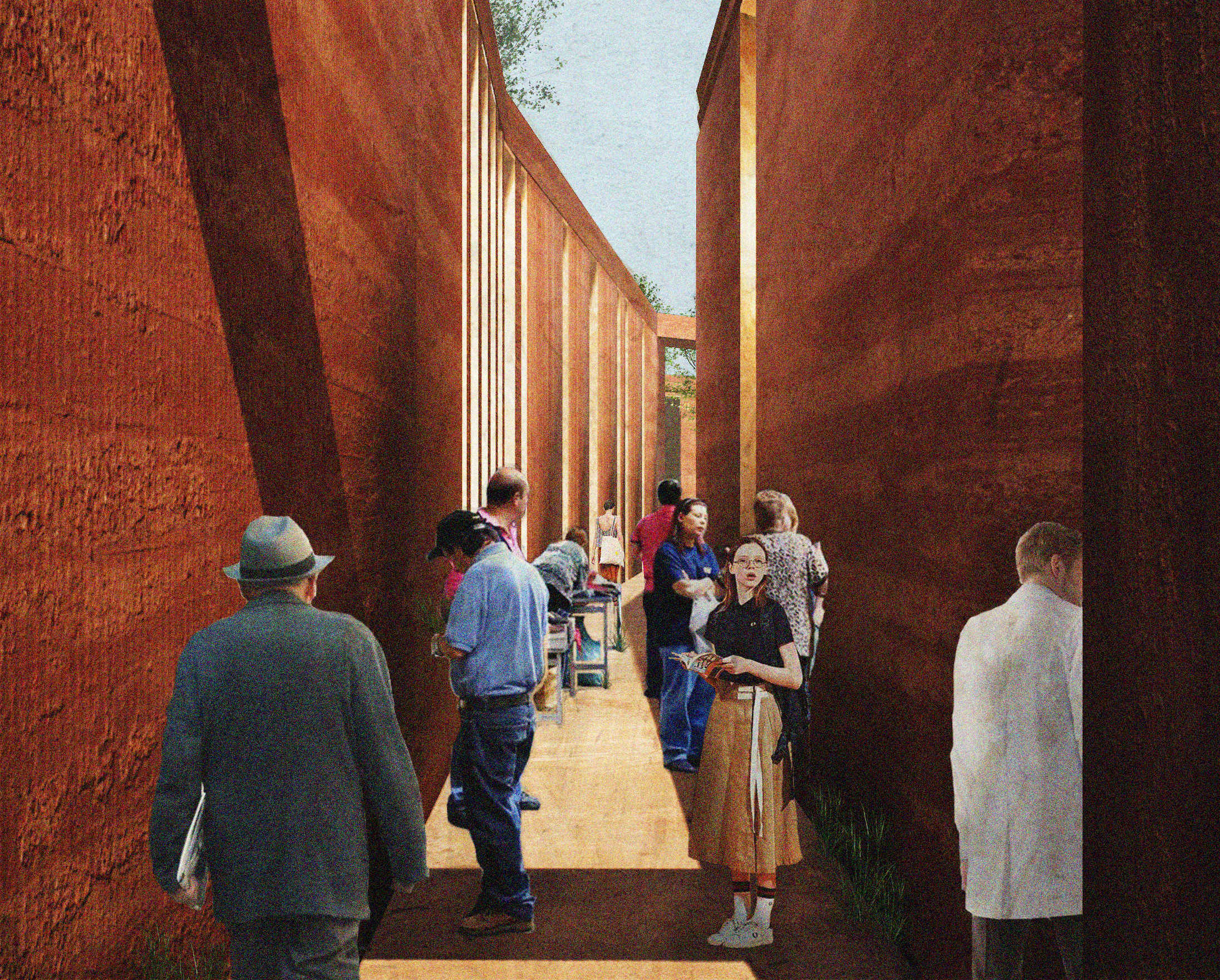

Architecture and nature are inextricably linked throughout the project. Water is both a guiding element and a resource to be managed, shaping movement and infrastructure. The mountain itself dictates spatial and symbolic hierarchies, turning the act of ascending the slope into a metaphorical elevation of awareness. The vegetation of the Capo Gallo Reserve plays a protective role, reinforcing the site’s ecological functions while visually connecting the project to its broader landscape.
Set within a harsh yet striking environment, the site is defined by its altitude (rising 557 meters above sea level), steep inclines, and exposed geological formations. Located within Zone B of the Capo Gallo Nature Reserve, it is subject to strict environmental regulations that further emphasize the need for a sensitive, regenerative approach. The project will make use of the materials already present on-site—the terracotta brick and concrete of the incompiuti—recycling them into new forms to create a dialogue between past and future. The aesthetic of the mountain itself, monumental and ever-present in Palermo’s skyline, will be respected and reinterpreted through the architectural intervention.
From a territorial perspective, the project operates as a new landmark within the urban landscape. As the writer so aptly described, “This mountain, which we discover from afar, is almost always before our eyes.” The intervention embraces this omnipresence, reinforcing the site’s visibility and transforming it from a place of exclusion into one of collective memory and civic engagement.


