RUE D’AUBAGNE
Location: Marseille, France
Surface:
Program: Senior Housing, Hotel, Café, Swimming pool
Status: ArchiJeune by Valode & Pistre Competition – 3rd Prize
Year: 2023
Team: Anissa Le Scornet, Enora Cloitre


Why “The Hotel of Tomorrow”?
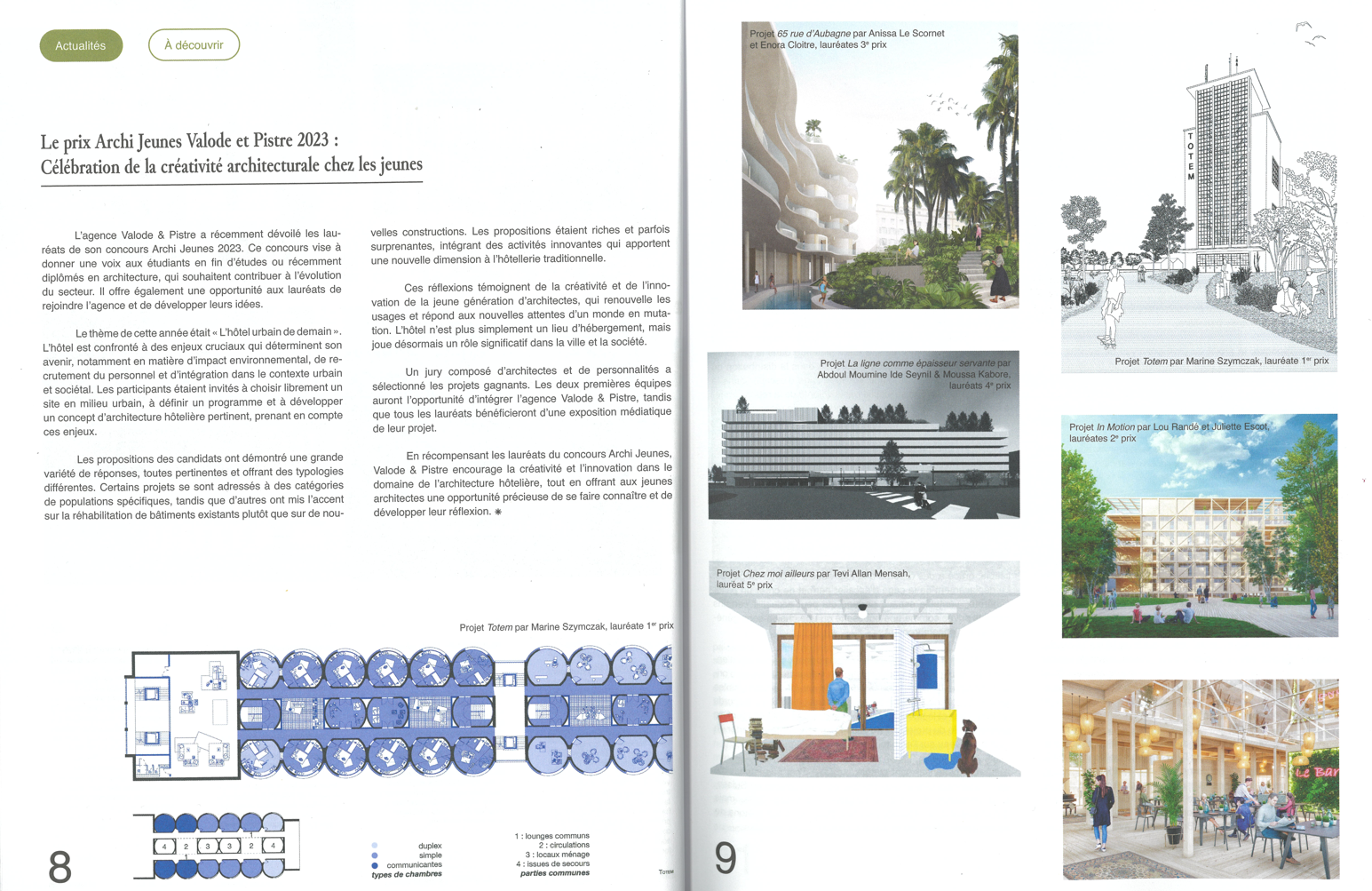
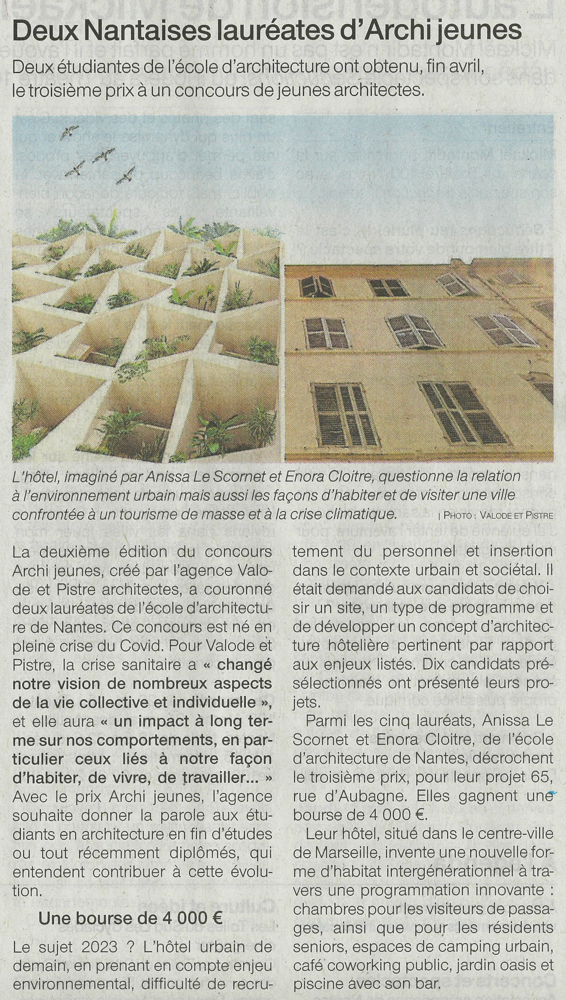
Our project reimagines the social model of a hotel by fostering intergenerational connections while addressing issues of mass tourism and social precarity. Located in Marseille’s Noailles district, a historically vibrant yet impoverished area, the hotel integrates tourists and seniors seeking independence in a secure, lively setting. The site, marked by the tragic collapse of two buildings on Rue d’Aubagne in 2018 that claimed eight lives, highlights the area’s poor living conditions. Combining innovative spaces—visitor rooms, senior residences, urban camping, a coworking café, a garden oasis, and a pool bar—the hotel serves as both a tribute to the neighborhood and a laboratory for a new, socially engaged hospitality experience.
How do we do it?
Inspired by the fishing villages of the Côte d’Azur, like Les Goudes, the hotel is organized vertically: a porous, public ground floor opens onto an urban oasis, while upper levels are more residential. The ground floor features fluid circulation and visual connections between spaces, with a landscaped garden offering lounging platforms and a mix of populations. Embracing the spirit of the French Riviera, the site includes a pool bar, seawater pool, lush Mediterranean garden, and lounge areas. The garden mitigates urban heat through evaporation and ensures rainwater infiltration by rewilding the soil. Natural ventilation flows seamlessly from the street to the garden. Sustainable materials, like locally sourced white stone (Pierre Notre-Dame) for structural walls, rammed earth for room walls, and lightweight earth partitions for insulation, ensure thermal comfort and a low carbon footprint. South-facing loggias act as thermal regulators, blending functionality with aesthetic integration into the urban fabric.


Each hotel room is designed as an individual, insulated module, combining spatial, thermal, and acoustic independence. The south-facing rooms for senior residents adhere to accessibility standards, while tourist rooms on the north side reinterpret traditional hotel typologies with circular layouts, eliminating long corridors and creating interstitial spaces. These forms influence the façade, echoing the garden’s organic curves. The rooms adapt to diverse needs with integrated features like kitchenettes or lounges, fostering interactions while preserving privacy. Tourists can personalize their stay by opening their rooms to shared areas, immersing themselves in the local community. With accommodations ranging from luxury suites (25m²) to budget-friendly rooms (15m²) and rooftop camping with views of Notre-Dame de la Garde, the hotel caters to all budgets. By enriching interstitial spaces, the project blurs the lines between traditional hotel models and the communal ethos of AirBnB, offering a unique, dynamic experience.


Who Is It For?
This project brings together two distinct groups—temporary, consumer-driven tourists and more vulnerable permanent residents—redefining mass tourism’s economic impact by sharing infrastructure, resources, energy costs, and even staff. Tourists become a financial resource, offsetting residency expenses for seniors, transforming them from drivers of inflation in Marseille into contributors to a social housing program. Unlike sterile, isolated spaces often offered to seniors, our hotel places them in the city’s heart, fostering human connections and facilitating day-care options for those partially autonomous. Public and private spaces, like a coworking café and a private park visible from the street, create opportunities for interaction, ensuring seniors are active participants in a lively urban environment.


Senior Resident
40%
75-110 yo
Annual Stay


Digital Nomad
10%
18-35 yo
Daytime Stay

Touristes
40%
26-75 yo
5 to 10-day stay
Backpacker
10%
18-25 yo
2 to 3-day stay
When Do We Go?
Our hotel is a place of transition, a living space, and a meeting point adapted to new ways of life (urban camping, elderly individuals without family, digital nomads, etc.). The hotel serves as a narrative space that blends the stories of travelers with the life stories of residents, creating a new chapter in the history of the Noailles neighborhood.